One of West Palm Beach's oldest neighborhoods, where Satchel Paige once pitched and Hank Aaron called the ballpark a second home, is about to get the kind of investment it was promised generations ago.
On May 26, West Palm Beach commissioners voted unanimously to hand four city lots along the Tamarind corridor to Palm Beach Venture Philanthropy, the development arm of the Quantum Foundation, clearing the way for a neighborhood-scale revitalization of historic Coleman Park. Together with nearby parcels the organization has been quietly assembling, the four lots become the footprint for a new mixed-income community in the heart of one of the county's most storied Black neighborhoods.
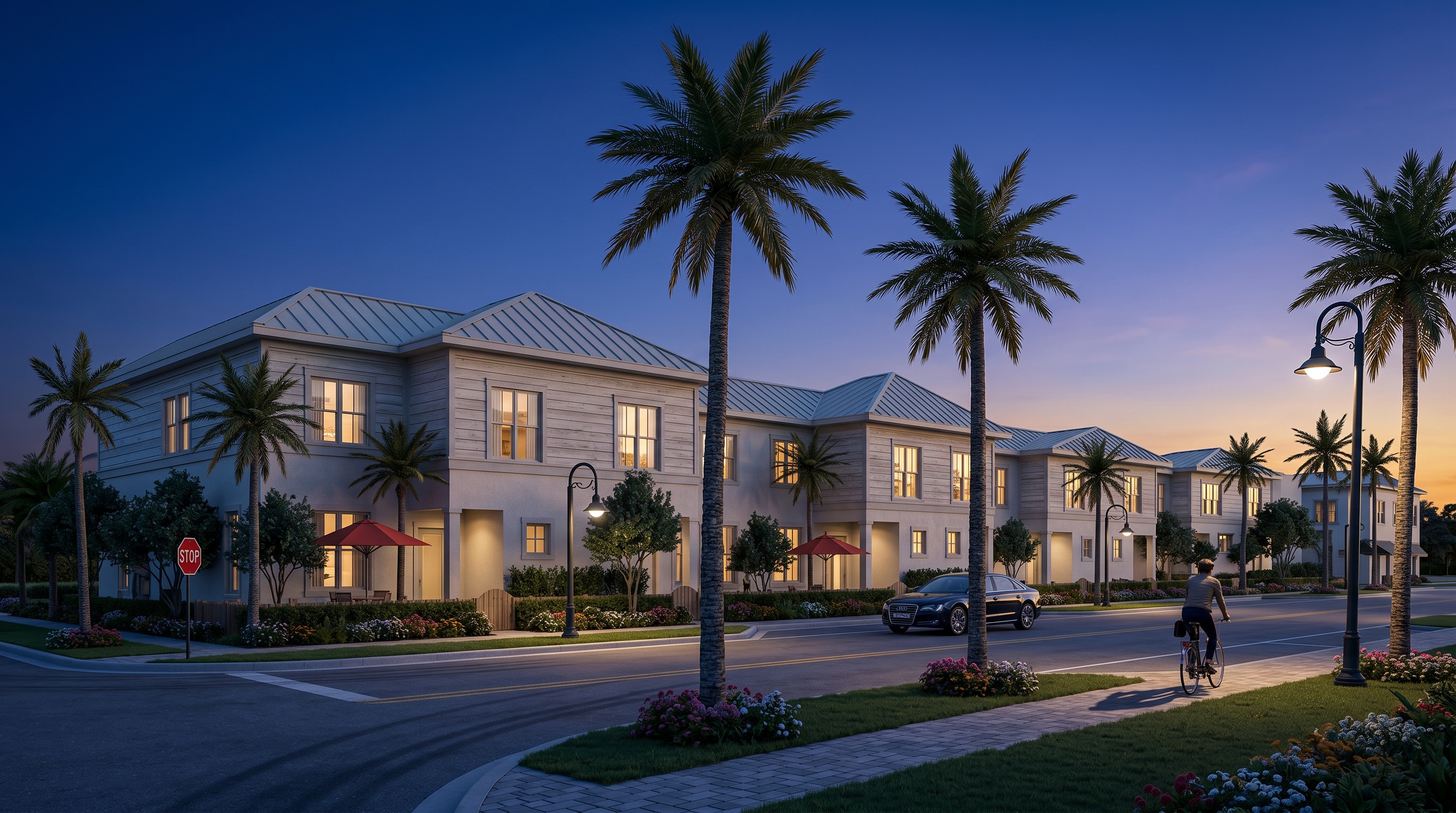
At the center of the plan is the Culture Yard, a community common designed as a gathering place for the corridor — and the early signs of it are already on the ground. A colorful pop-up library structure has been installed at 2003 N. Tamarind Avenue, with new bus shelters going up at two nearby stops, the kind of small, visible wins the organizers can deliver now while the larger build takes shape. Around it, the vision calls for townhomes alongside a mixed-use building that pairs rental apartments with ground-floor commercial space reserved for community-serving uses like childcare and healthcare, plus a fresh-market grocery and a cultural gathering space anchored by a permanent library. Under the agreement with the city, at least 40 percent of the homes will be set aside as affordable or workforce housing.
The architecture comes from West Palm Beach firm Spina O'Rourke + Partners, with Coleman Park serving as the pilot for a far bigger ambition. Palm Beach Venture Philanthropy, created by the Quantum Foundation in 2023, is treating the neighborhood as the first test of a model it intends to scale across roughly two dozen similar census tracts countywide — an effort to address the root causes of neighborhood poverty rather than its symptoms. The stakes are framed starkly by the organization itself: residents of Coleman Park live to an average age of 68, fourteen years below the countywide average of 82, a gap the foundation ties to decades of disinvestment in the historically Black communities along Tamarind.
The partnership has drawn a wide circle, with the nonprofit Neighborhood Renaissance — which builds single-family homes on vacant lots — joining as a development partner, and RISE Coleman Park acting as the on-the-ground liaison to residents. The organization has already poured more than $8 million into the neighborhood, including support for the recently completed Coleman Park Renaissance Apartments, a $20.5 million project that brought 43 units of workforce housing to Tamarind Avenue this spring.
Before the land transfer is final, the organization must begin construction within three years, with the full revitalization estimated to take about five — putting a reimagined Coleman Park on track to reshape the Tamarind corridor by the early 2030s.