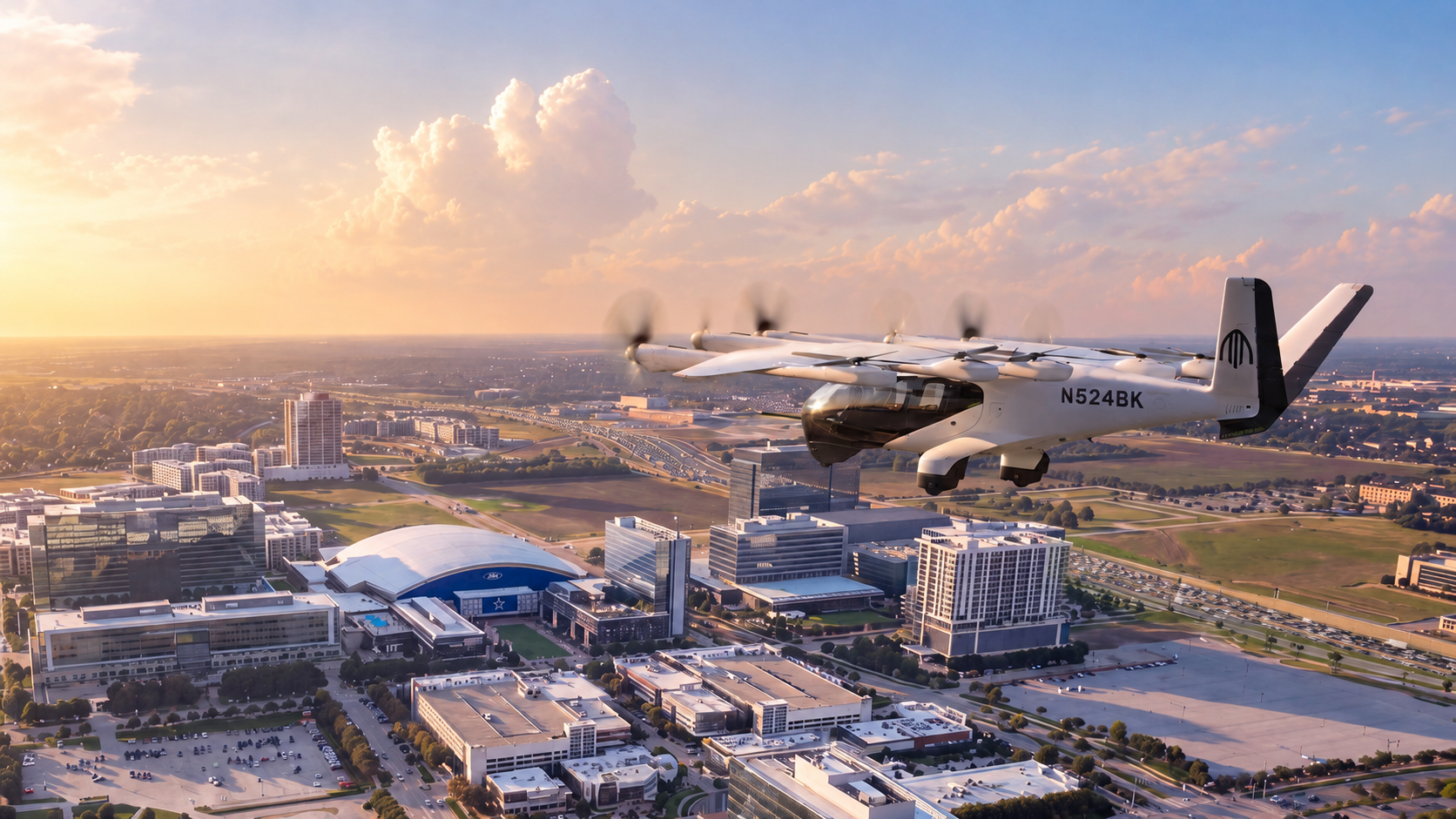
Texas is officially getting electric air taxis, and Archer Aviation has just unveiled plans for three separate air taxi networks across the Texas Triangle of Houston, Dallas-Fort Worth and Austin, a megaregion home to more than 20 million people and some of the fastest-growing metro areas in the country, with routes designed to turn 60-to-90-minute drives to airports, business districts and coastal destinations into 10-to-20-minute flights. The plans landed on October 23, in the middle of Formula 1's United States Grand Prix weekend, and the all-electric Midnight aircraft meant to fly them is parked in the Fan Zone at Circuit of the Americas, where anyone with a ticket can walk up to it through October 25.
Midnight is a piloted eVTOL, an electric vertical take-off and landing aircraft that lifts off from a pad rather than a runway, and it carries four passengers plus a pilot at a maximum speed of 150 mph with a range of 100 miles. It runs with zero operating emissions and low noise, and it is built for the rhythm of a city day rather than a long haul. The aircraft is optimized for back-to-back trips of roughly 20 miles, and a charge takes about 10 minutes, so it can land, plug in and be ready to fly again before the freeway below has moved a mile. That is the math behind all three maps: every route on them is a hop that eats an hour or more on the road and a few minutes in the air.
The first of those maps covers Dallas-Fort Worth, where the network is planned to connect Dallas Fort Worth International Airport, Dallas Love Field and Addison Airport with business hubs like The Star at Frisco Station, stitching together the region's three main airfields and the corporate corridor north of the city. Archer is partnering with Hillwood, the developer founded by Ross Perot Jr., on the DFW network, which puts a developer with deep roots across North Texas behind the landing sites rather than leaving Archer to assemble them alone. For a traveler landing at DFW with a meeting in Frisco, the trip that today means the Dallas North Tollway at rush hour becomes a flight that ends on a pad at the office.
Houston's network, the one with the longest reach, is planned to link George Bush Intercontinental Airport, William P. Hobby Airport and Sugar Land Regional Airport with downtown locations including the Thompson Hotel helipad. From there it would run on to coastal Galveston, turning the hour-plus drive from the city's core to the Gulf into a short flight. That last leg is the one that changes a weekend: a Saturday morning on the water no longer starts with an hour on Interstate 45, and the hotel helipad means the ride can begin on a roof rather than at an airfield on the edge of town.
Austin's network is the tightest of the three, linking Austin-Bergstrom International Airport and Austin Executive Airport with the Circuit of the Americas helipad, which is why the unveiling landed at the racetrack this week. Midnight is on display there from October 22 through race day on October 25, 2026. A fan who walks past it in the paddock crowd this Sunday is looking at the vehicle that is meant to carry the next one from the arrivals curb at Bergstrom to the circuit gate.
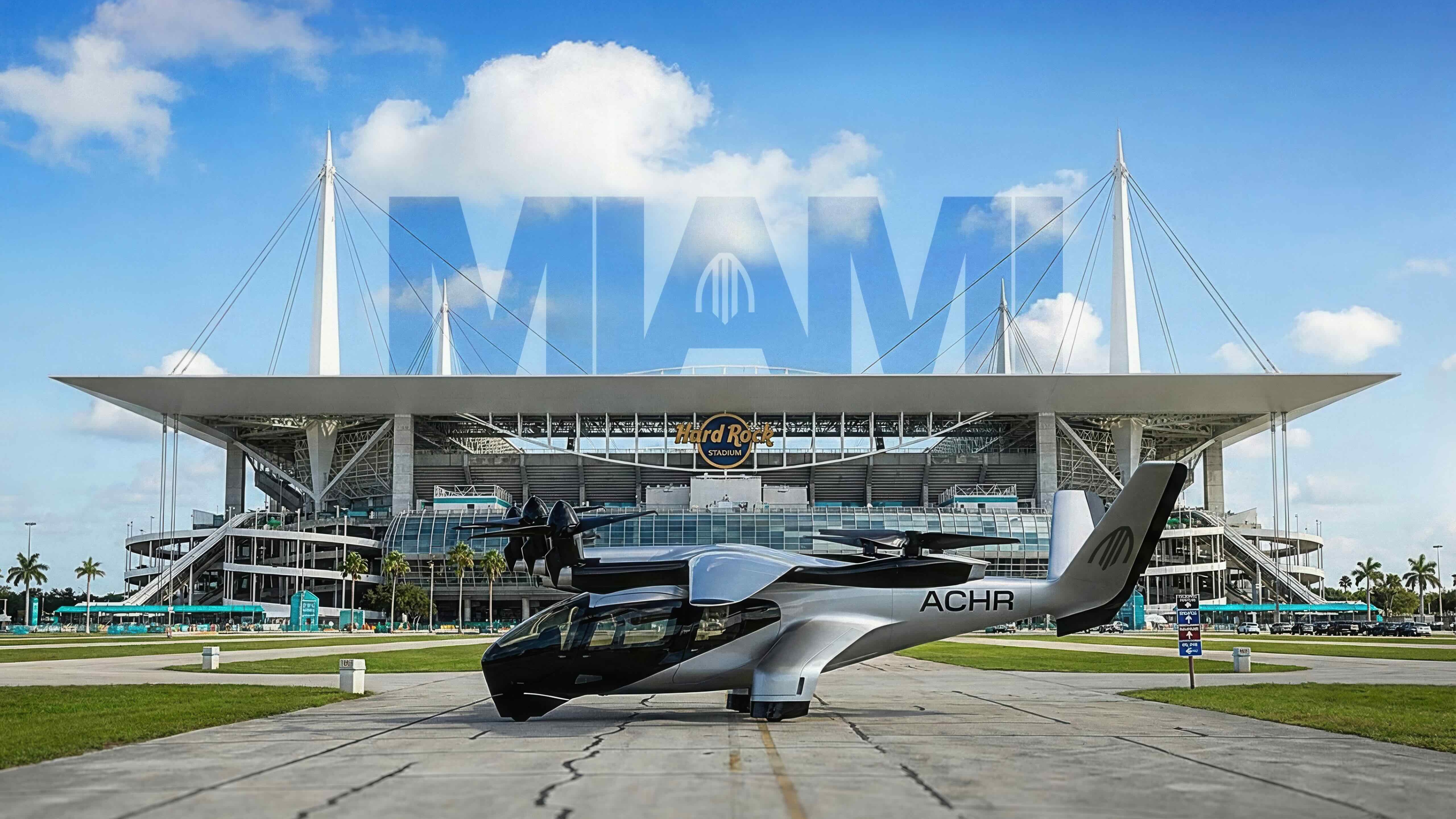
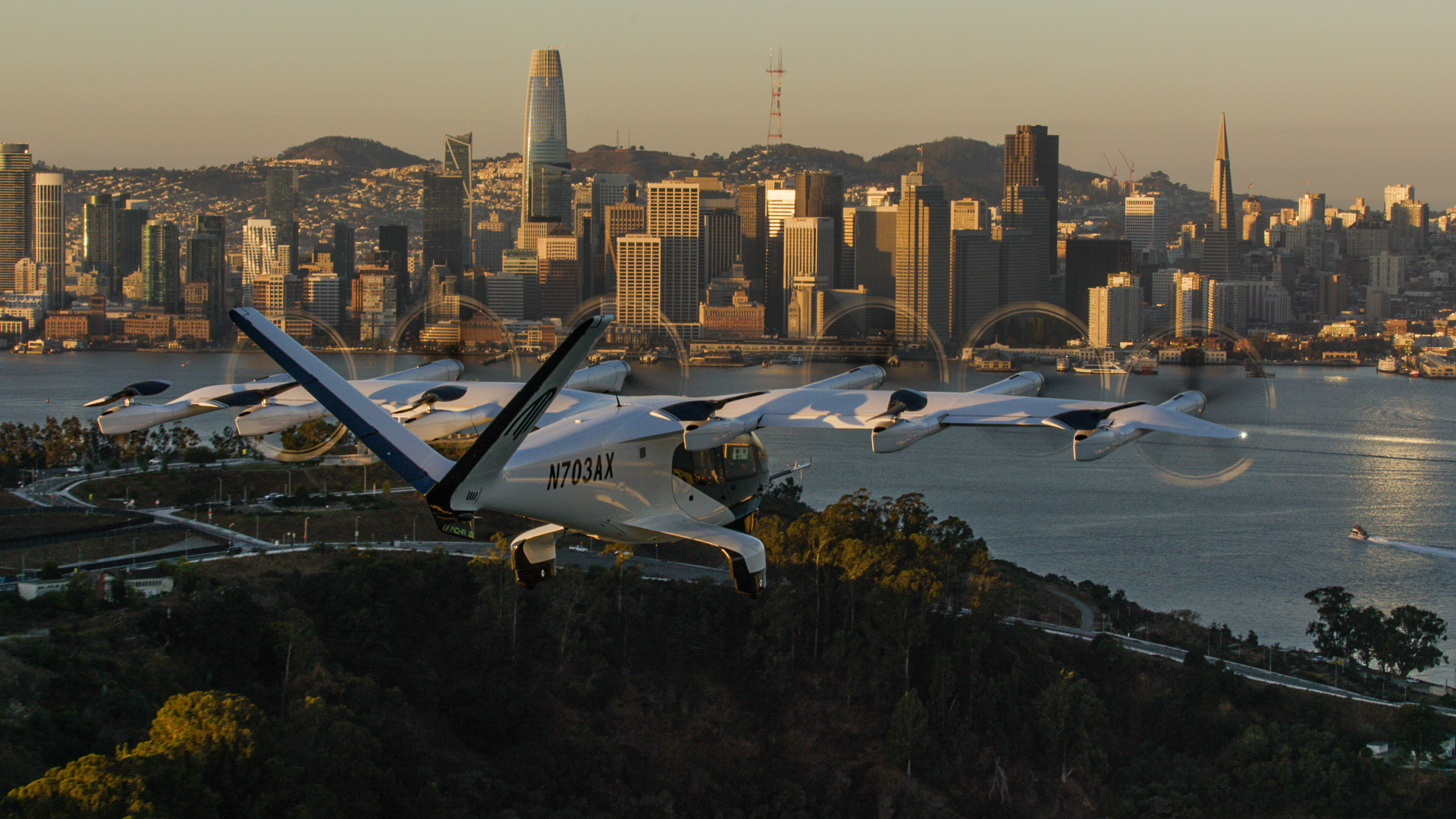
The networks are planned as part of the White House's eVTOL Integration Pilot Program, and they arrive on the heels of real flying rather than ahead of it. Archer recently completed air taxi testing across the San Francisco Bay Area, and the company says a recent multi-city flight tour covered seven cities over three days; Archer is also working with Related Ross on South Florida's first electric air taxi network, connecting Miami through Fort Lauderdale, West Palm Beach and Stuart, so Texas joins a wider set of American metros Archer is mapping at once.
What stands out in the Texas plan is how much of it leans on pads that already exist, the Thompson Hotel helipad downtown and the helipad at Circuit of the Americas among them, which is a faster way to connect a city than waiting for purpose-built vertiports to rise. "Texas is setting the bar for America's leadership in the next generation of aviation," said Adam Goldstein, Archer's founder and CEO. "Our planned networks will make the benefits of electric air taxis real for Texans, trading hours in traffic for minutes in the air, while connecting the biggest airports, business districts and sporting hubs in ways that America's largest megaregion needs to grow."
The distances on the Texas maps read as a list of drives every Houstonian, Dallasite and Austinite already knows by heart: Intercontinental to downtown, DFW to Frisco, Bergstrom to the track, Houston to the beach at Galveston. On Midnight each of them becomes a flight of 10 to 20 minutes, in a cabin that seats four behind the pilot, from an aircraft that charges in about 10 minutes between runs. After Austin, Archer plans to fly in Los Angeles.