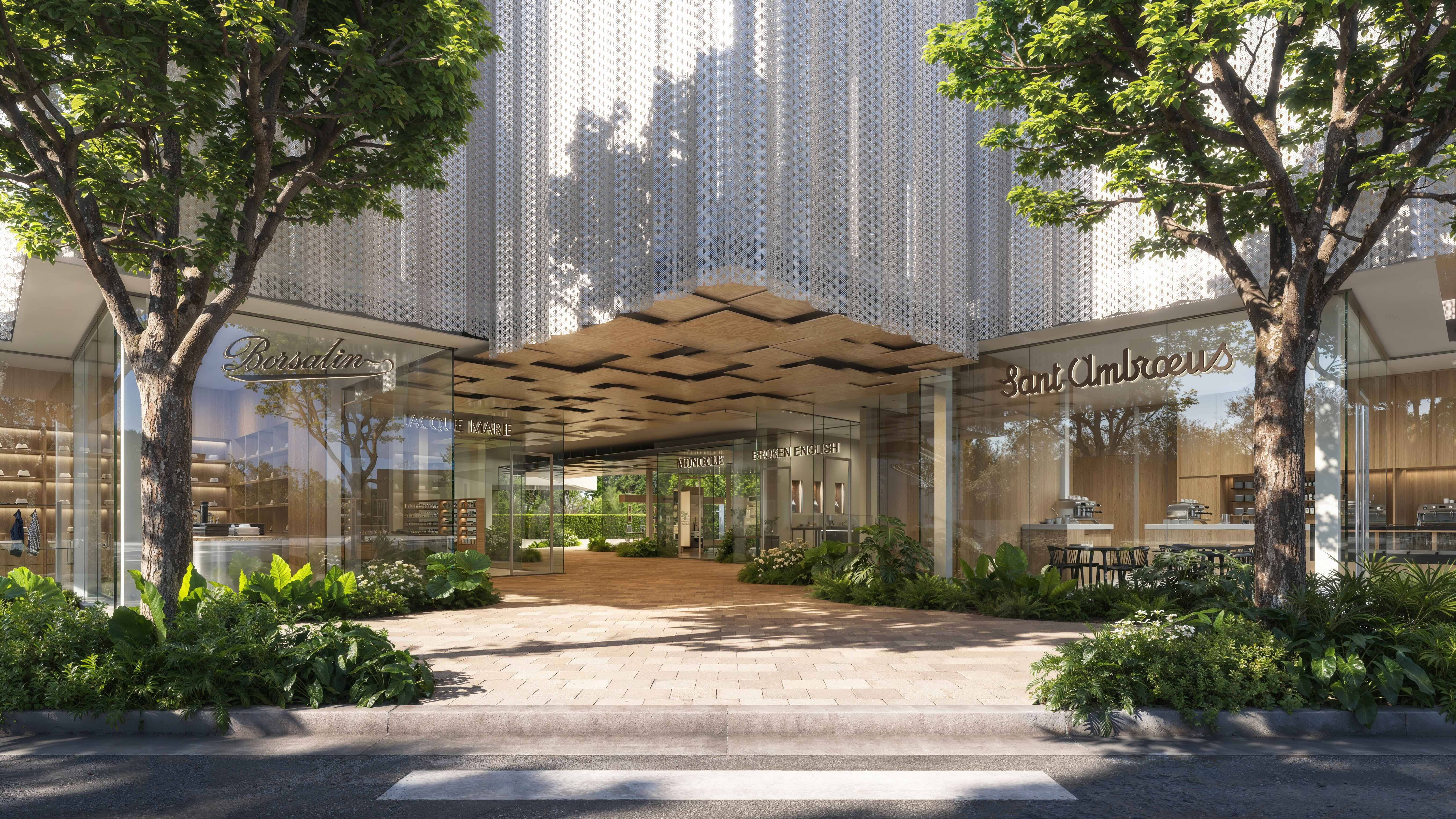
The Miami Design District has spent the last decade earning its place among the most globally recognized luxury retail neighborhoods in the United States. The next chapter of its evolution focuses on how the district lives in the early morning and the late evening, between shopping hours. MIRAI Design District — the forthcoming mixed-use development that is internationally acclaimed Japanese architect Kengo Kuma's first U.S. mixed-use project — has signed Sant Ambroeus, the 1936-founded Milanese institution, as a signature hospitality tenant, with a roughly 5,000-square-foot all-day café concept opening in 2028.
The Sant Ambroeus space will combine a full-service restaurant, a coffee bar, and an outdoor dining component, conceived as an all-day gathering place built into the rhythm of the neighborhood. Interior design is by Milan-born, Paris-based architect and designer Fabrizio Casiraghi, whose portfolio is rooted in pairing timeless European elegance with a more contemporary sensibility. The MIRAI outpost marks Sant Ambroeus's second planned Miami location, part of a broader expansion that also includes forthcoming openings in Los Angeles and Dallas, alongside the brand's existing presence in Milan, New York (Madison Avenue, the West Village, and Soho), Palm Beach, Aspen, and Paris.
Founded in 1936 on Milan's Corso Matteotti as a patisserie, Sant Ambroeus has spent nine decades cultivating a reputation as one of the city's most enduring hospitality institutions — a Milanese gathering place that drew the city's writers, fashion designers, and creative class through the second half of the 20th century. The brand crossed the Atlantic in the 1980s, opening first on Madison Avenue and then in the West Village and Soho, where it became a fixture of Manhattan's fashion and art worlds. The business remains family-led, with SA Hospitality Group's managing partner Gaetano Guarducci overseeing its current expansion. "At Sant Ambroeus, we've always looked for locations that already possess a strong sense of identity, culture, and creative energy," Guarducci said in a statement. "MIRAI immediately felt aligned with that philosophy."
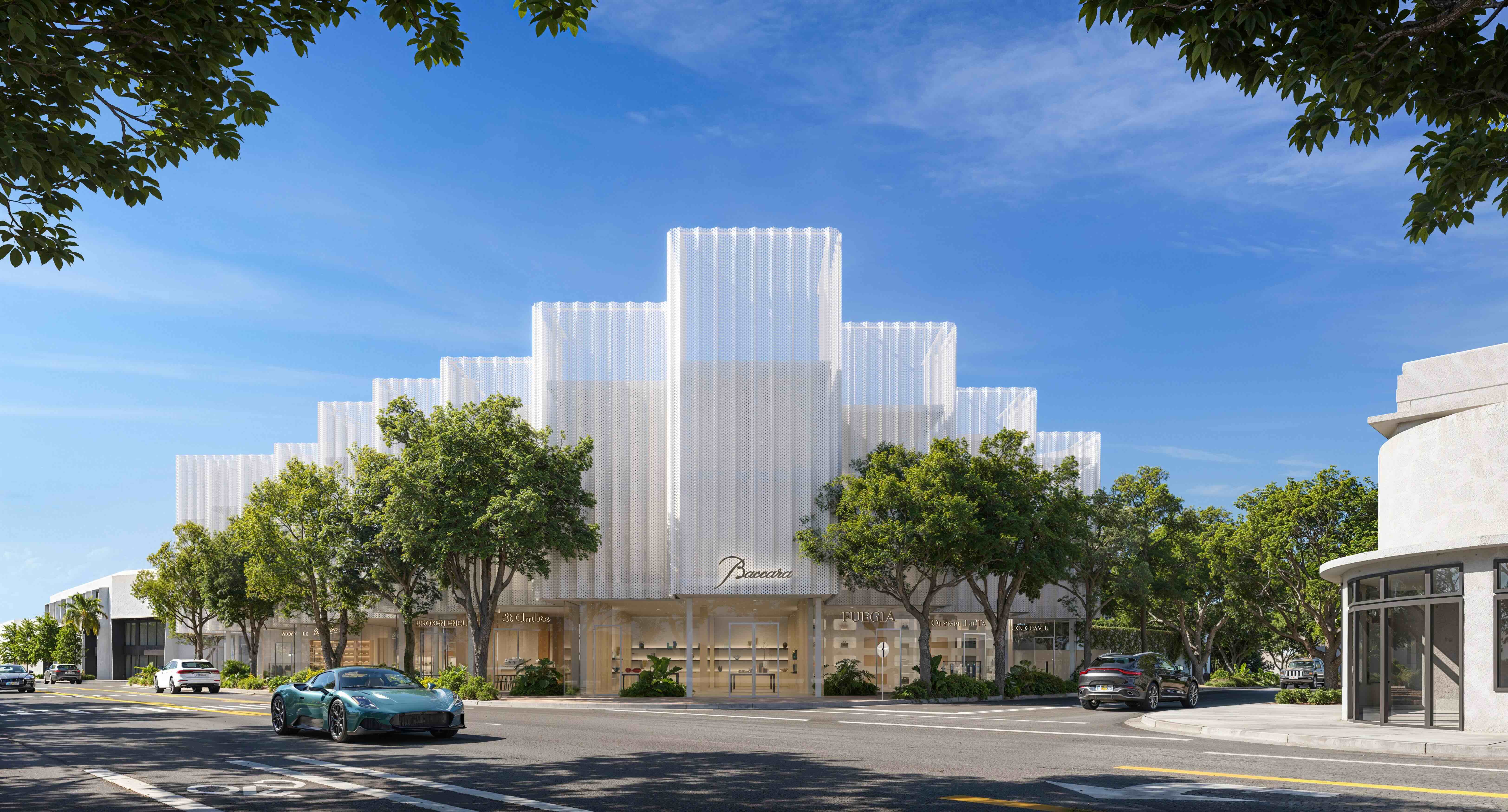
MIRAI Design District is the first ground-up mixed-use development from Kengo Kuma and Associates (KKAA) in the United States, a notable milestone for the Japanese architect whose body of work — including the V&A Dundee, the Japan National Stadium for the 2020 Tokyo Olympics, and the Suntory Museum of Art — is recognized for blending architecture, nature, and material craft. At MIRAI, that vocabulary takes the form of what Kuma has called a "floating lantern": a transparent ground floor wrapping a lush central garden, with boutique retail, hospitality-driven public space, and approximately 41,000 square feet of boutique Class A office tailored to family offices and design-oriented businesses. The project sits at 4218 Northeast Second Avenue, on the northern edge of the Design District, and is positioned as a more intimate, pedestrian-scaled extension of the neighborhood. Groundbreaking is scheduled for Summer 2026 with delivery by the end of 2028.
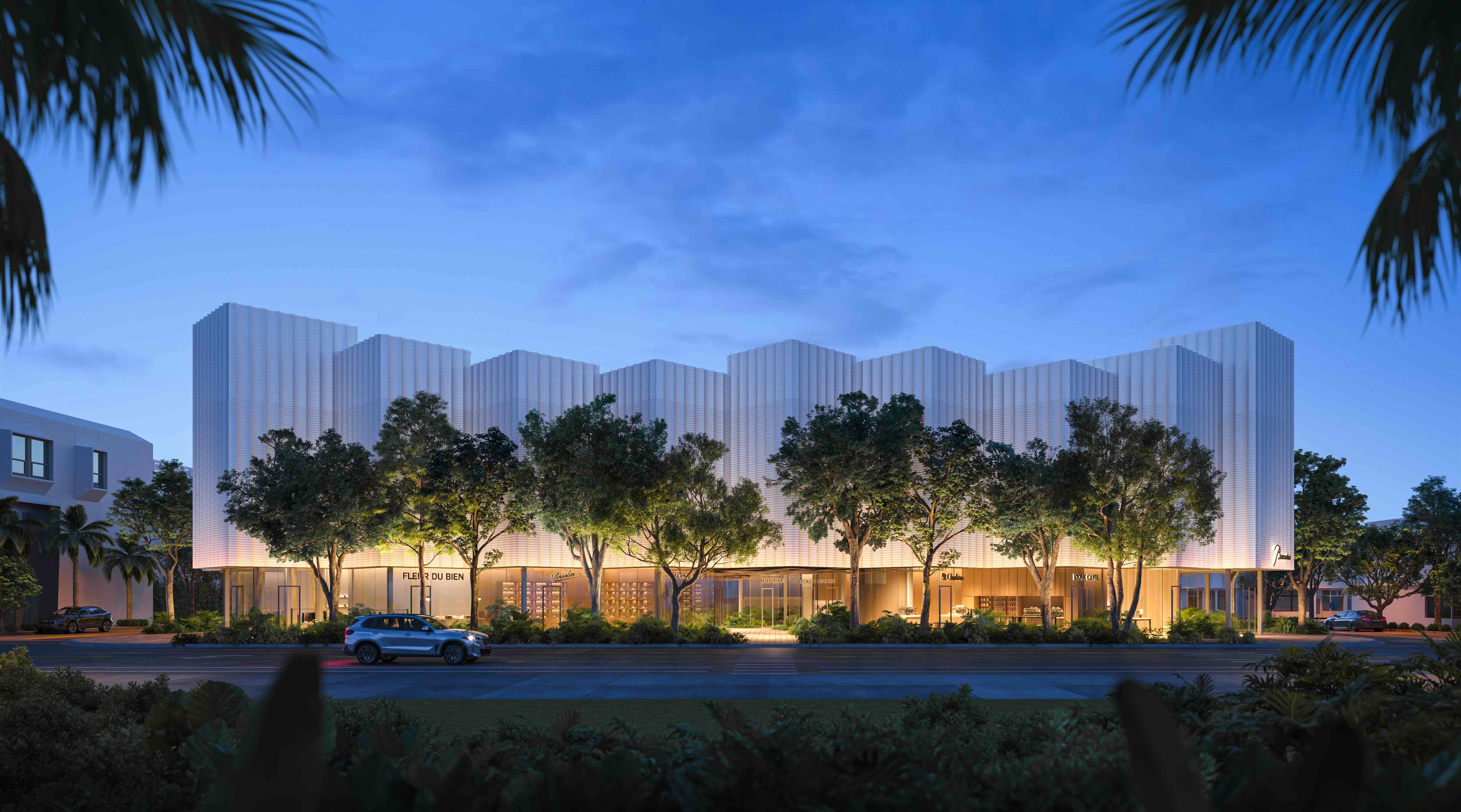
The project is being developed by a consortium of four firms — WellDuo, Leviathan Development, Lionheart Capital, and The Lane Organization — with WellDuo principals Eduardo Pelaez and Alvaro Cardenas leading on the hospitality and retail operating side. Landscape architecture is by Island Planning Corporation under principal Nathan Browning, and lighting design is being handled by the storied Italian lighting house Viabizzuno, whose presence pulls another piece of Italian design vocabulary into a project already anchored by Milan-born hospitality. "The brand has a rare ability to create spaces that feel simultaneously international and deeply personal, rooted in elegance, culture, and everyday experience," Pelaez said in a statement.
The Sant Ambroeus signing is the most significant leasing announcement to date for MIRAI, and an early signal of how the project's tenant roster is being curated — international, design-first, and weighted toward operators with long brand histories.